
As a creator, I’ve struggled with the infamous pitch. I’ve spent countless hours researching the perfect pitch, searching for “perfect pitch template” on Google, and (in recent years) prompted AI to “draft a pitch in my voice to [insert person or organization],” at which time AI usually spits out something generic that works about 1% of the time. If you’re like me and have pitched several books and concepts to hundreds of people and organizations over several years, that doesn’t feel like success; it feels more like a “blind squirrel finding an acorn” moment. With all that said, I’m not writing this to solve your specific problem or to provide an oversimplified pitch template; I’m simply sharing my thoughts and a framework to orient you in the right direction and hopefully aid your success.
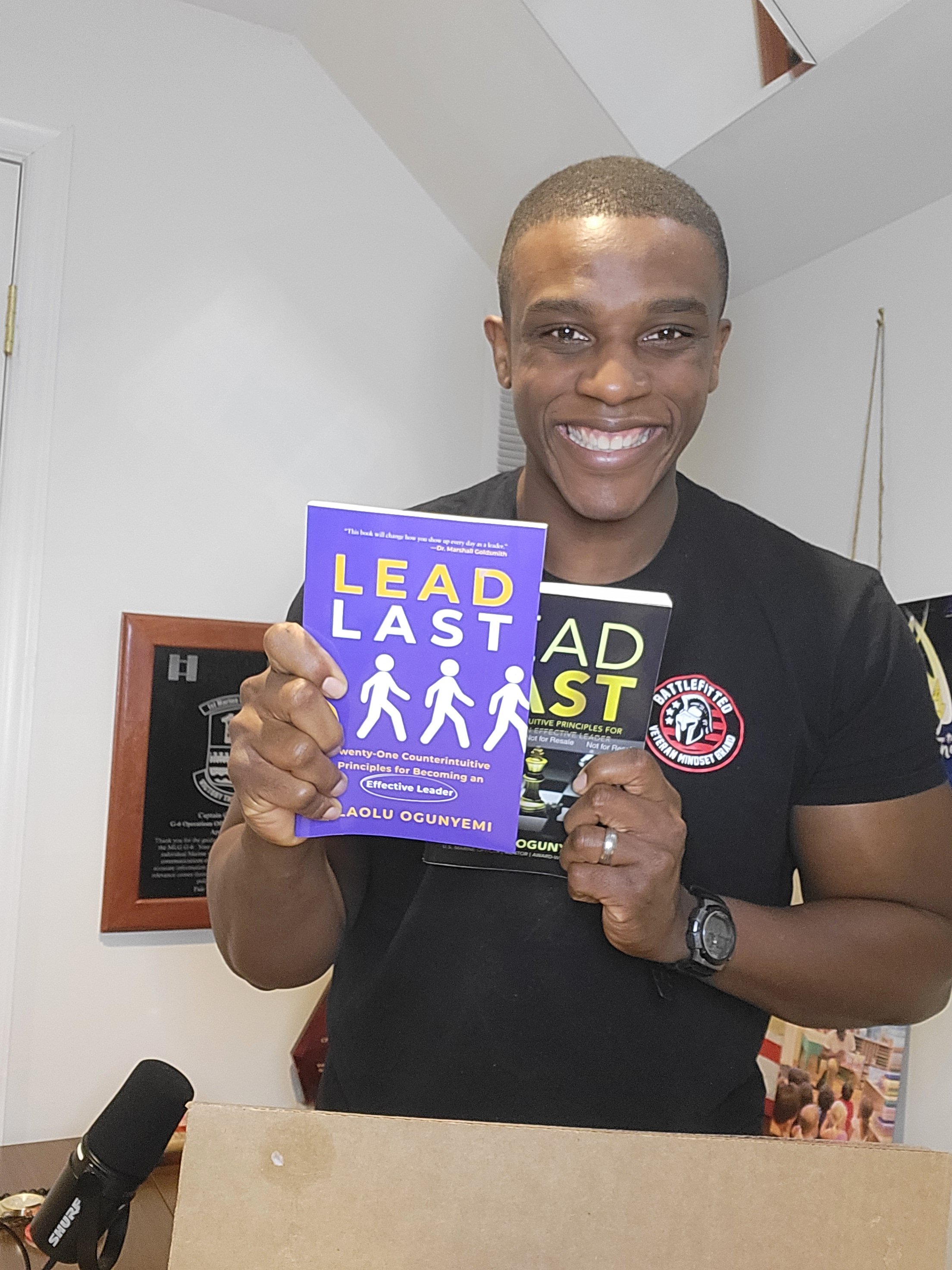
This article incorporates my thoughts from a private workshop I led, in which I shared what worked for me and helped leaders, creators, and authors refine their pitches. The frameworks are from my “Lead Last” philosophy–my upcoming book–and are an answer to a few of my own struggles that I jotted down:
- Why don’t I feel confident when it’s time to pitch?
- I know this book and concept are great and can potentially change lives!…. How do I clearly articulate the concept to others who aren’t staring at this problem and/or solution?
- What in the world do publishers, agents, endorsers, and partners even want?
- I’m one of what seems like billions…How can I stand out?
If you’ve found yourself asking one or more of those questions, hopefully, this article can help guide you in the right direction! If you like what you read and want additional support, gather some like-minded people, and hit me up so we can do a workshop together!
Introduction: The Mindset of Collaboration
I know what you’re thinking…This is stereotypical leadership writing — beginning with the mind. I get it, and I almost chose to start elsewhere just to sound fresh and counterintuitive. But then I remembered that this isn’t an attempt to sell you anything; it’s me sharing what works for me, and I know how important changing my perspective was in relation to adjusting my approach to pitching. It’s not revolutionary. In fact, it’s something I learned to practice in my profession as a Marine.
In the Marine Corps, we don’t just ask for resources; we demonstrate how those resources accomplish the mission. Pitching your book or idea is no different. The first thing I had to do was to challenge myself to stop looking for “buyers” and start looking for collaborators. This isn’t just an argument of semantics. When you ask an endorser, a reviewer, or a publisher to back your book, you are asking them to put skin in the game, so the first thing they will want and need to know is: “What is in it for me?”
This is a perfect place to use my D.O.P.E. framework from “Lead Last” to explain my approach:
D — DREAM: The Profile of a Partner
Before you send a single email, you must clarify the “blur” of your target list.
- The Mission: Define exactly what you want to achieve. Do you need a big-name endorsement? A retail distribution deal? A podcast interview?
- The Profile: Create a high-definition vision of your ideal collaborator.
- What are their values?
- What projects have they backed recently?
- The “Why”: Why would they care about your book or idea specifically? If you can’t answer this, they won’t either.
O — OFFLOAD: Mapping the Hidden Market
You don’t have to do this alone. Offload the “cold call” anxiety by leveraging the power of The Hidden Market.
- The 92% Rule: Statistics show that 92% of professionals trust recommendations from people they know.
- The List: Write down three tiers:
- Direct Connections: Who do you know right now?
- The Referral Bridge: Who do your friends know? (4x more likely to be “hired” via referral).
- The High-Value Cold Call: Organizations whose mission mirrors yours.
- AI Staff Task: This is something I talk about in my AI writing workshop. Use your Scout AI to research these individuals’ social media, recent interviews, and public interests so you can speak their language.
P — PLAN: The 8-Second “Bottom Line Up Front” (B.L.U.F.)
Here’s a military concept/acronym I learned to use very early in my career: the bottom line up front (B.L.U.F.). Attention spans are shorter than ever (approx. 8 seconds). You need a framework that gets to the point before they check their watch.
The 8-Second “Architect” Pitch Framework:
- The Credibility (Who): “I’m [Name], [Role/Title].”
- The Problem (What): “I’ve solved the problem of [Core Pain Point]…”
- The Solution (Why): “…through my book, which helps [Audience] achieve [Result].”
- The Collaboration (The Ask): “I’d love to discuss how this aligns with your mission at [Organization].”
Example: “I’m Olaolu Ogunyemi, a Marine Officer, leadership strategist, and author. I’ve developed a framework to bridge the gap between military discipline and intentional parenting. My book, ‘Lead Last,’ helps leaders build resilient cultures, and I’d love to explore how this supports your leadership initiative.”
Quick pause: Don’t be robotic with this! This framework is simply to give you an idea of how to structure your conversation, but you’ll lose someone if you use this direct, Marine knifehand-esque approach with someone who prefers a warm conversation first. That’s why it’s important to get to know who you’re pitching as much as possible before you pitch. At a minimum, know their public persona and study similar people. Then, flow with the conversation and its “vibe” or tone.
E — EXECUTE: Landing the Plane
Establish the connection and introduce yourself with contagious energy, but don’t forget to Land the Plane.
- The Ask: If you had the meeting to pitch, then pitch. Don’t walk away with “a great feeling” but no commitment.
- The “Follow-on” Maneuver: If the conversation is flowing but time is up, the “landing” is to secure the next meeting.
- Immersion: Follow their accounts. Comment on their work. Become a student of their brand so the collaboration feels organic rather than forced.
Conclusion: The Resilience of Purpose
Here’s the truth: become comfortable with the word “No.” I have some tips on responding to rejection, and I’ve even shared my reaction to my first one-star review, but we can summarize these ideas with another military analogy. In the Marine Corps, a plan rarely survives first contact with the enemy. Guess what? Rejection is just “contact.”
- Reflect, Don’t Retreat: Learn why they said no. Was the timing off? Was the “Why” unclear?
- Million-Dollar Mindset: You are pitching a million-dollar idea. If one person doesn’t see it, they aren’t the right partner for right now. Stay focused on your purpose. You are looking for reliable partners, not just specific ones.
Hopefully, these tips help you refine your pitch. Again, reach out if you’d like to walk through this pitch in a workshop format. I’ll provide the downloadable handout that I use in those workshops below.
Happy pitching!
Lead Last: Twenty-One Counterintuitive Principles for Becoming an Effective Leader (Amplify Publishing Group)
Most leadership books tell you to take charge and command the room. But what if the most effective leaders do the exact opposite?
In Lead Last, Marine Corps officer and award-winning author Olaolu Ogunyemi reveals twenty-one counterintuitive principles that challenge traditional wisdom and spur real, measurable results. Drawing from over a decade of experience leading high-performing teams, he provides a refreshing blueprint rooted in servant leadership, emotional intelligence, and long-term vision.
You’ll learn how to create resilient teams, make bold decisions without sacrificing trust, and master the “Who’s Next?” principle for establishing a legacy of mentorship that ensures your leadership outlasts you.
Whether you’re a CEO, entrepreneur, educator, or emerging leader, this concise, actionable guide will encourage you to lead with influence, not just authority.

Leave a Reply