
Over the next few weeks, I’m continuing to unpack key ideas from my latest book, Lead Last. Let’s make this a discussion. I’m not here to lecture you or convince you that I’m right. Rather, I want to hear from the people actually leading every day so I can learn, too! One of the themes we’ll explore is insecurity in leadership and how it affects the way we show up every day.
Today’s focus is one of my favorite topics because it makes people feel uncomfortable. Critiques from some of my buddies as we laughed and threw darts at my concept were, “Here we go with the touchy-feely stuff”; “This is probably one of the most self-indulgent or navel-gazing exercises a leader can engage in…”; “Sounds like you’re writing to someone who is too sensitive or too focused on his feelings…leaders need grit.”
There are two things you should know about me: 1. I love intellectual debate! It gives you a 360-view on a problem or idea. 2. I have absolutely no problem with being a contrarian when I feel the moment calls for it.
The latter is why I placed this idea at the beginning of the book:
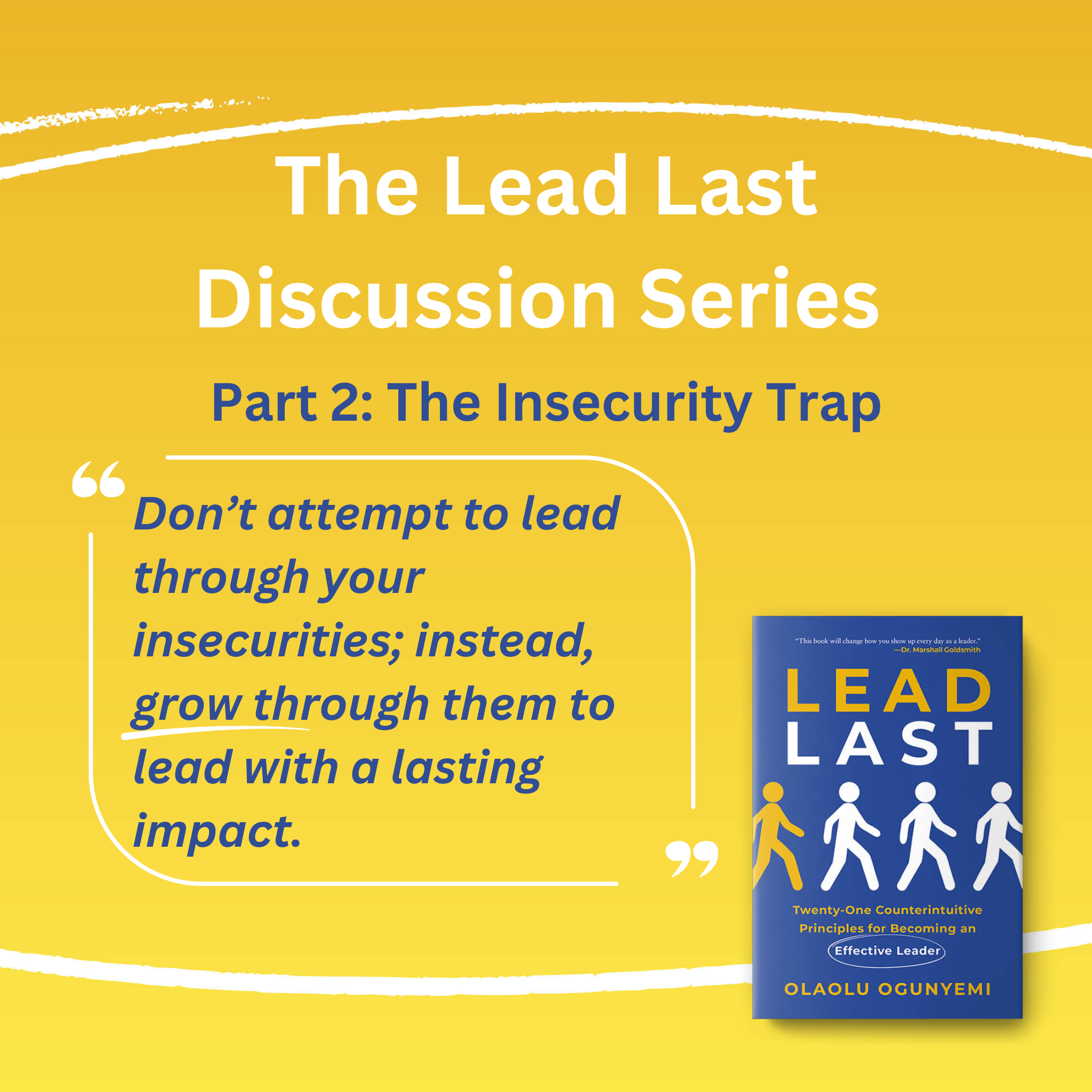
“Don’t attempt to lead through your insecurities; instead, grow through them to lead with a lasting impact.”
Here’s the deal: most leaders (like the friends I asked to rip apart my theory) don’t think they’re leading out of insecurity. They either think they’re hiding it or it simply doesn’t exist. But insecurity has a way of showing up, whether we acknowledge it or not. It influences how we make decisions, how we respond to pressure, and how we interact with the people who depend on us. That means you can ignore it, but it still shapes who you are and how you lead.
I wrote this line and developed this concept to speak directly to the leaders who pride themselves on being tough, self‑reliant, and unbothered. The ones who believe conversations about insecurities—or any interpersonal skills, for that matter—erode authority, sacrifice efficiency, or signal a lack of competence. Frankly, I’ve been that leader before, and I know how easy it is to confuse emotional suppression with strength.
The reality is that when we refuse to acknowledge our insecurities, we end up reacting to internal conflicts we don’t fully understand. That’s when leaders become defensive, controlling, dismissive, or unpredictable. On the other hand, when we choose to face those insecurities, we take control of them. We become more intentional with our actions, our reactions, and our decisions. That’s the difference between leading through insecurity and growing through it.
How Insecurity in Leadership Shapes “Powerless Communication”
Adam Grant talks about “powerless communication,” the idea that leaders who acknowledge uncertainty, ask questions, and stay curious often build more trust than those who project constant confidence. My principle approaches the same issue from a different angle. Instead of focusing on how leaders communicate, I’m addressing what drives that communication in the first place. If a leader refuses to confront their insecurities, they end up communicating from a defensive posture—whether they intend to or not. Grant encourages leaders to rethink the assumption that authority requires certainty; I’m challenging leaders to rethink the assumption that authority requires emotional invulnerability. Both ideas point to the same truth: people follow leaders who are grounded, not guarded.
So here’s the question I want to explore with you:
Are you leading from a place of stability, or are you still trying to outrun something you haven’t addressed?
Think about your last tough conversation or big decision, or the last time someone challenged your idea. Did you respond from confidence or from insecurity?
Let’s talk about it in the comments. I want to hear your perspective.
#Leadership #LeadershipDevelopment #EmotionalIntelligence #ProfessionalGrowth #LeadLast
Check out Part 1 here!
Leave a Reply